Lessons From the Sisterhood of Leah and Rachel
Their father arranged it, their culture approved it and they adhered to a life in which two unevenly-matched sisters shared one husband.What can we deduce from the damaged sisterhood of Leah and Rachel?

Sisters in Adversity
Leah and Rachel were enveloped in an adverse situation. Their father Laban arranged it, their culture approved it and they adhered to a life in which two unevenly-matched sisters shared one husband. There were no obvious options to the life they had been given. Their husband loved Rachel, the younger more beautiful one, and that frustrated Leah. Leah was producing children, which Rachel could not, and that made Rachel jealous. The dysfunctional sisterhood became a breeding ground for discontent, self-pity, competition and controversy.
Still, when Ruth the Moabitess converted to Judaism, the city elders blessed her with the hope that she would follow in the footsteps of the lovely Rachel and the fruitful Leah, the two women “who together built up the family of Israel.” (Ruth 4:11) Together, the sisters had achieved national significance by producing the twelve leaders of the tribe of Israel.
What can modern-day sisters learn from the lives of sisters who spent their productive years feuding against each other, while they were fulfilling their God-given destiny? What can lessen their discontent amid circumstances which frustrate them? See what lessons can be learned from the damaged sisterhood of Leah and Rachel.

Replace Discontent With Devotion
Discontent (dissatisfaction with one’s circumstances) can breed negativity or it can motivate change. Leah became Jacob’s wife because she was the firstborn in her family, not because Jacob desired her. After producing his first four sons, Leah praised God for a while (Genesis 29:35). Then when Rachel allowed her maid to become her surrogate to produce children, Leah reacted by also having her maid become her surrogate to add two more sons to her number of children. Even after an additional two children from her own womb, making a total of eight sons, Leah was no closer to being loved by Jacob.
After Leah’s first four sons, Rachel’s jealousy made her so desperate, that she threatened to die if her husband did not make her pregnant. Eventually, her maid bore two children and she bore two more giving her a total of four children, but she died in childbirth.
The Prayer of Serenity comes to mind: “God, grant me the serenity to accept the things I cannot change, courage to change the things I can, and wisdom to know the difference” (Paul Reinhold Niebuhr).
What changes in attitude might Leah have developed if she continued to raise her praise? Might Rachel be influenced to praise God too (even in silence) for her husband’s favor? What are the chances that their devotion would have inspired gratitude to God for the value He had given them? Changing discontent into devotion can make a lifetime of difference for women who trust God to maintain them and to control their family’s future. Also, family devotion to God empowers mutual devotion to one another.
Replace Self-Pity With Self-Worth
Love can look like pity, but the way we see it depends on what we think we deserve. If we love, we think we deserve love, so what was Leah’s perspective? When God blessed her with her first and second child, she moaned:
“It is because the Lord seen my misery. Surely my husband will love me now” (Genesis 29:32).
“Because the Lord heard that I am not loved, he gave me this one too.” (Genesis 29:33).
Leah, so steeped in pity over Jacob’s rejection did not understand her value in God’s scheme which arranged for her to produce Judah, the head of the tribe through which the Messiah was born.
When Rachel received her first child by a surrogate, she said, “God has vindicated me” (Genesis 30:6). She suffered from self-imposed guilt, the same way modern sisters do when they try on their own to get what they want, and they fail. Self-worth, not self-pity, understands: “No good thing does [God] withhold from those whose walk is blameless” (Psalm in 84:11). It’s difficult to appreciate one’s personal sense of worth when desperation for human love blocks sight of the blessings from the God who truly loves.
A sister’s responsibility is to find and embrace her God-given value, and to walk accordingly. In honor of her worth, God blesses her according to His purpose, not necessarily to match what her other sisters have.
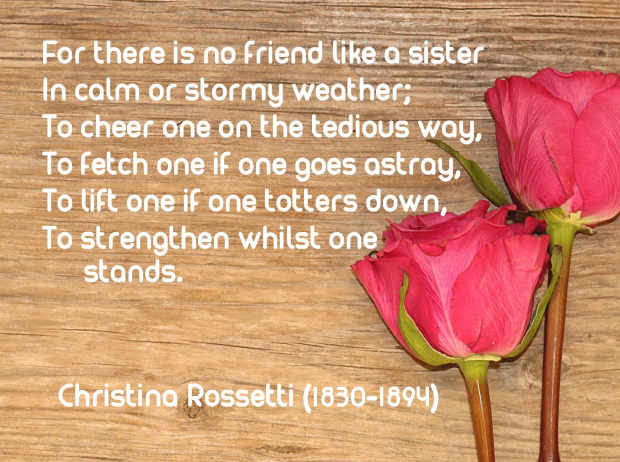
Public Domain Pictures
Replace Competition With Cooperation
There is no competition necessary for the things which guarantee joy and success in life. Talents and skills are either inherent or developed by personal effort. Competition could not alter Rachel’s beauty. Competition could not affect Leah’s fertility. Neither can the virtues, the capabilities, the wisdom of today’s woman be bartered in competition. Instead of fighting to gain what other sisters have, why not use that same strength to share what one has?
Rachel’s claim on the birth of her second child by proxy was false. She said, “I have had a great struggle with my sister, and I have won.” Sorry, Rachel. Sisters weary themselves when they struggle; they win when they share their strengths.
Today’s woman cooperates by encouraging the commitment of her married sisters, by babysitting for the fertile, by seeking wholesome association for the singles, by providing companionship for the lonely one. Such sisterly acts erase the desire for competition. Our joy increases when we help others increase their joy.
Replace Controversy With Celebration
“Rachel and Leah (the official first wife named first) who together built up the family of Israel” missed out on their well-deserved celebration. Jealousy and insecurity sabotaged the appreciation of their God-given value and ruined the mood for joy.
So, the controversy over who is more popular, who does it best, who has the most is useless. Let sisters use their strength wisely, to boost each other’s joy, to teach the truth about self-worth, to protect sisterhood from the selfish schemes of the world outside. Let them devote themselves in worship to God and in service to each other. Let sisters celebrate love and togetherness.
References
Bible Hub Commentaries on Genesis 29 and 30.
Bible quotes are from the New International Version.
© 2023 Dora Weithers